

When it comes to beauty, Sundberg-Ferar has been making every product we touch a bit better and a bit more beautiful for over 85 years. In fact, one of our Founders famously stated:
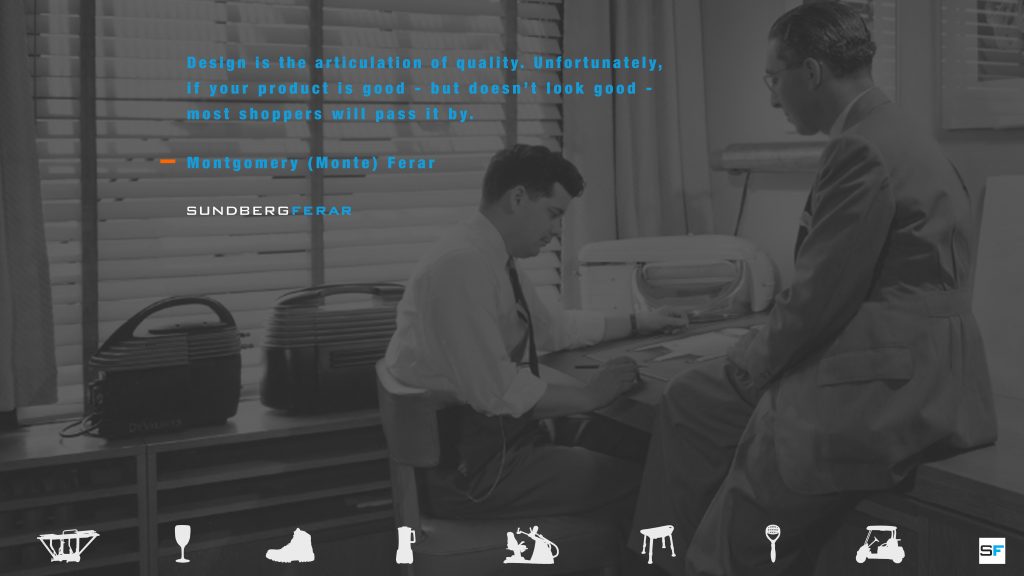
As industrial designers, we firmly believe that good design is always a blend of emotion and function. Function has to be there of course, but what people forget far more often are the emotional, experiential, and aspirational aspects of a product.

When people think of emotion in a product, they usually think of just its exterior beauty. Beauty is a big part of it, but it’s still a subset and not the entirety. As designers, while we always aim to make visually beautiful products, we don’t actually start in the world of visual exterior beauty. We start by finding the right problem to solve and then solving it beautifully. Beauty is important, but as designers, we first look at “is this useful” and “is this usable”.
Our focus today, however, is this widely misunderstood element of design: Beauty.
We’ll start – and I hope you understand why – by understanding beauty in the world of natural history. Then we’ll move on to look at beauty in the world of arts and crafts, and finally in the world of design. Designers are actually born from artists. However, while fine artists and craftsman may use art for self-expression, designers must and do use art for user expression, and user empathy. We’ll take a look at how we do that.
Beauty in the Natural World
Let’s step back in time – waaaaay back to the time when earth was formed, and let’s establish some context. Earth was formed 4.6 billion years ago! It wasn’t until 3.8 billion years ago, that the first life arose, and it wasn’t until 130 million years ago that actual flowering plants evolved from the existing flora. In the scheme of things, it was only a very short 200,000 years ago that we – Homo Sapiens – evolved.
The human species’ time on this earth has really not been long. In fact, Bill Bryson, author of “A Brief History of Nearly Everything”, said that if the timeline of earth were represented by the span of your outstretched arms – all the way to the tips of your fingernails – with a single swipe of a nail file, you would wipe out the span of man’s existence on this earth. Despite how infinitesimal our human history is, the 200,000 years in which we’ve learned how to survive and thrive have planted the original seeds in our psyche of how we experience and perceive beauty.
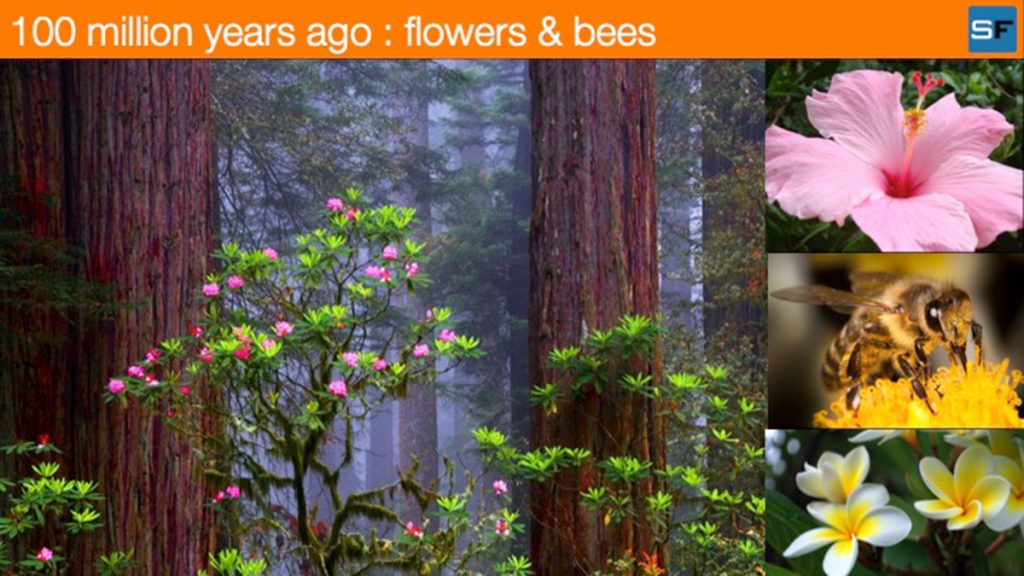
Going back to plants for a minute: For millions of years, the only plant life on earth was all coniferous, like in the dinosaur age for instance. There was nothing in plants that was especially attractive or beautiful until 130 million years ago when angiosperms, or flowering plants, graced the scene. These plants evolved because they needed to attract bees and animals to themselves in order to cross-pollinate, reproduce and survive. Here, in fact, we see the first “Grand Contract” signed between the plant and the animal kingdom: Transportation of genes in exchange for calories. Plants achieved this through exterior visual elements such as color, vibrancy, contrast and symmetry.

Of course, flowers also began to lead to fruit, and these scrumptious containers of vital carbohydrates, sugars and proteins were as irresistible as crack cocaine for animals. Throughout the process, animals came to understand that these flowers were not just bright and eye-catching. They were vital to survival. They learned where to find them, what indications would lead them to these harbingers of life, and most importantly that beautiful flowers lead to food, which gave them the ability to live and reproduce and pass on their genes to their progeny. Beauty = Food.
As humans evolved, we too had to find food for survival and we were already imbued with this instinctual attraction to beauty for survival. As we foraged in the wild – we’ve been foragers for 99% of our genus’ time here on earth – we weren’t just wandering around aimlessly, hoping to come across something we could eat. Our foraging was a very purposeful search for those triggers like flowers that meant food was near. Natural selection in Hominids dictated that our surviving species were able to remember things like where the best flower patches are, what kinds of areas are likely to have flower patches at what times of the year, what flowers produce the best fruit, etc. From the beginning, our very survival has been linked to our understanding of beautiful things. Beauty = Survival.
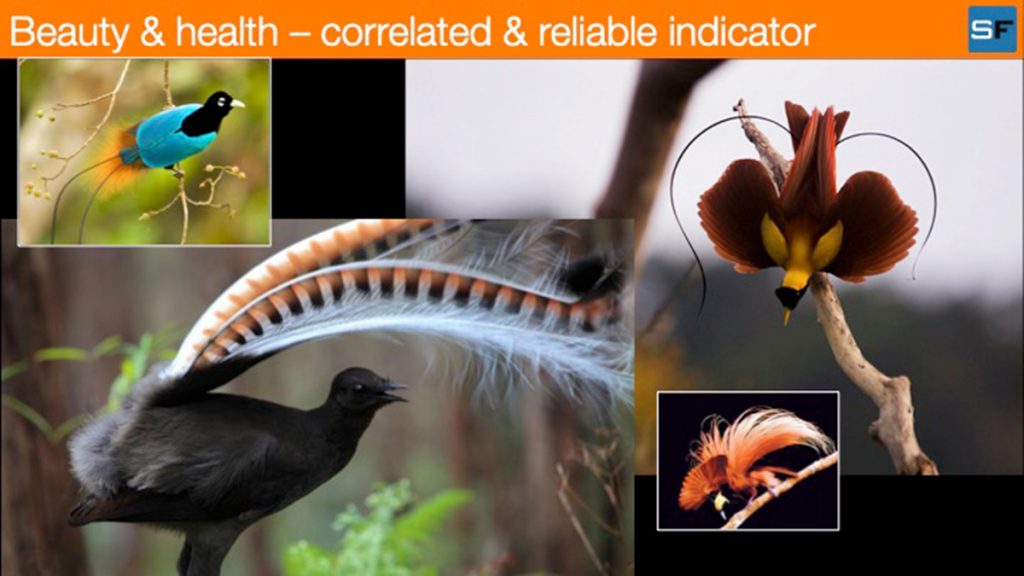
Our understanding of beauty also comes from how we have evolved to reproduce. Most animals use beauty in one form or another to attract a mate. In many species, the male has some sort of dance, courting ritual, or visual display he does for his mate. Take a male peacock for example. The beautiful feathers it uses to woo a female aren’t any good for anything else. They won’t give the peacock flight, and they even require a huge investment of extra metabolic energy to maintain. All this energy is for one functional purpose only – beauty. It might seem like an inadequate reason, and yet, the peacock can and must afford this investment in beauty because it allows it to succeed in reproducing. The overindulgence that it can afford is an indicator of its healthy life. There is a huge correlation between the elements of beauty – like color and symmetry – and health. If a peacock or bird of paradise has enough energy and vitality that they can spend it on beautiful foliage, they must be healthy enough to survive and this makes them desirable. Beauty = Health.

This kind of seemingly superfluous beauty is still around today. Men put in the extra effort to add a pocket square or handkerchief to their suit jacket, even though they don’t use it to wipe their noses. Athletes wear fancy bright sneakers that would work just as well if they looked dull and boring. Women wear or use all sorts of accouterments that are otherwise useless. Why? Because we are still using beauty to establish our place in the world, to proclaim who we are, and to make provision for our own future and prosperity. Beauty itself is useful. Beauty = Utility.
Everywhere – not just in birds but, throughout the ocean, in the mountains, in the desert and in every corner of the earth, everything is using beauty to achieve its goals. The same rules are universally present in nature. Even non-living things – rocks, the eagle nebula, streams, shells, earth – all follow the same laws of beauty. How? Because the mental models we’ve formed from the sum of our evolutionary experiences cause us look at them all and see beauty. Long before we over-analyze all the functional or physical elements, our gut reaction is to think “beautiful!” That reaction is always in the world of emotion.
Beauty can be soothing, calm, relaxing, inspiring, motivating, healing, invigorating, or confidence inducing. We shouldn’t think that somehow beauty is separate from function or form or fun or any other part of an object. They are a duality, and all are integrated in the singularity when you lay eyes on the thing you’re attracted to. Beauty has value and function in and of itself in our lives.
Beauty in the Manmade World
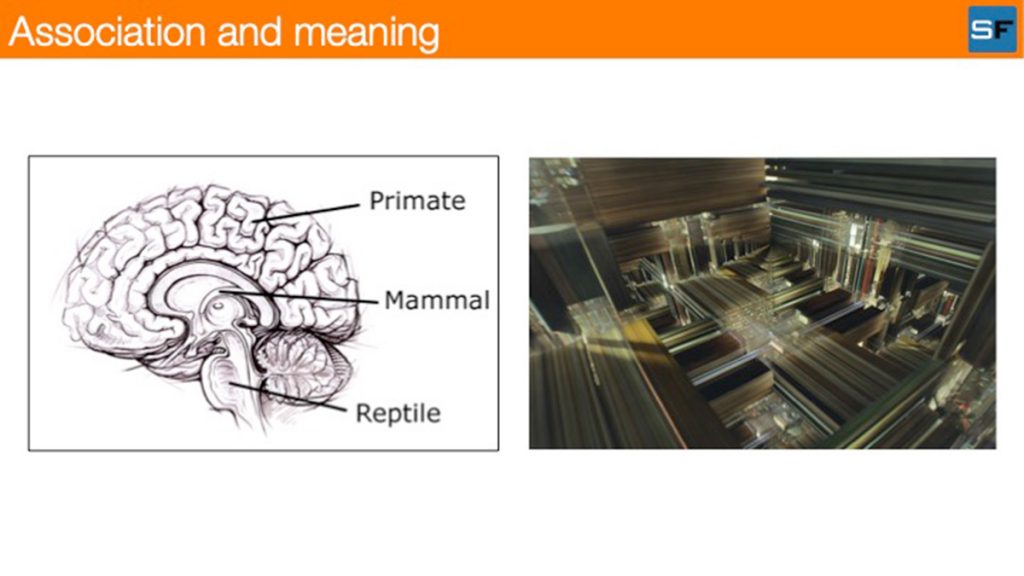
We looked at nature and saw how our minds are trained to recognize beauty and add meaning to it, based on the way our reptilian brain looks for ways to understand the world around us. Let’s turn from the natural world to the manmade world around us to further understand beauty.
In the manmade world, everything is designed by someone, and disciplines that deal with beauty are numerous: Architectural design, industrial design, graphic design, fine arts, handicrafts, poets, musicians, and so on. In this article however, we’ll restrict our view to what we know best: Industrial Design.

Paul Rand once said, “Industrial design is the best business plan”. At Sundberg-Ferar, we happen to heartily agree with him, so let’s go ahead and unpack the role of beauty in industrial design together.
Industrial Design is not solely about visual beauty. That’s just one part of it. We also look at human behavior, the context and culture surrounding the human and product interaction and the product’s value –intrinsic, but also instrumental. Again, however, we’re limiting our focus to beauty in this article.
The way we perceive beauty and our corresponding behavior in relation to a product is a mixture of both the rational and emotional parts of our brains. Marshall McLuhan says “Everybody experiences far more than he understands, and yes: it’s experiences, rather than understanding, that influences our behavior.” Understanding: the rational, fact-based, cognitive part of us responsible for learning reading, understanding, teaching etc., is overruled by experience. And when we say experience, it’s not just the experiences you’ve accrued personally over your years on this earth. It’s also how our experiences as a species have molded us over 200,000 years in order to survive. It’s this entire experiential force in your behavior that influences your responses.
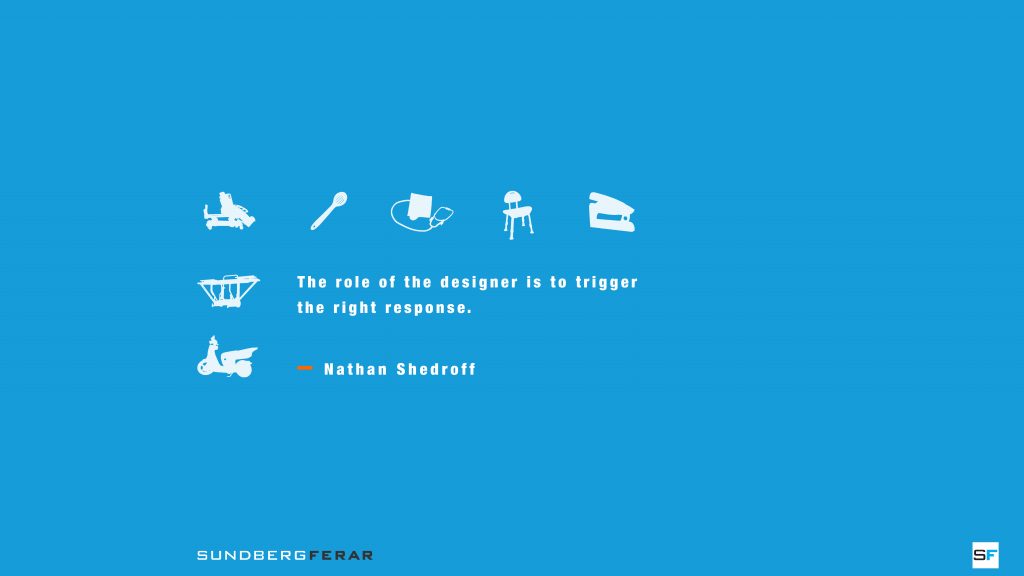
In industrial design, we make successful products by making them express themselves visually so that they trigger the right response. As Nathan Shedroff says:
The whole thing starts with how the user sees what you’ve designed, and 80% of the information we take in as humans is visual. Because of this, beauty is a subset of utility. It is the first clue whereby we can “read” a product and know how we should perceive it and use it. Beauty helps in understanding the structural architectural aspects of a product: how it’s built, where to hold it, where not to hold it, where to click, where not to click, how to read it, how to get information out of it, or put information into it.

That’s how beauty feeds into the utility of a product. This visual architecture helps the user connect back to their mental models and perceive the product the way you want them to. This in turn evokes the right response. Unbeknownst to you, your brain is always attaching meaning to the things you see without you having to reason at all. Reasoning comes later, after that first gut-level response from your reptilian brain that associates meaning before you even think. This mental engine is always running, just like the other involuntary, passive mechanisms in your body. That’s why your product – whether you’ve purposely designed it or not – is triggering your user’s reaction based on their mental models around beauty. You have to make sure your users start attaching the right mental model to it. You have to take charge of making your products beautiful.
Dimensions of Beauty
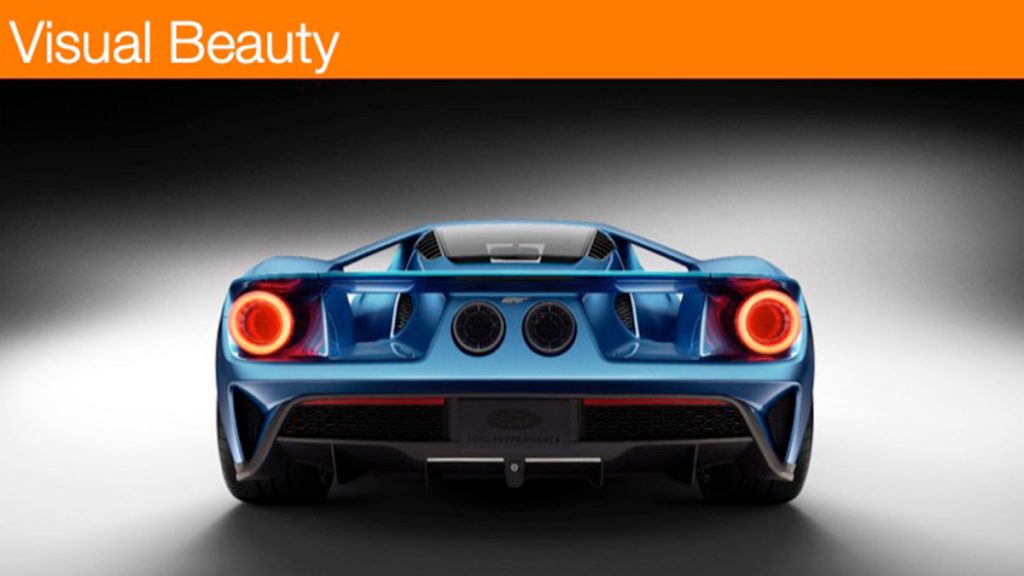
There are three dimensions to beauty. The first is visual. For example, the Ford GT oozes its strength, performance, and athleticism just from the way it looks from a distance. Visual beauty is created by all the elements of formal design: shape, scale, color, graphic breakup, and beyond. These elements help tell us what something is. Again, in terms of our evolutionary mental models, something big, rough, and strong might be associated with a predator, and therefore with danger. By contrast, if something is small, fuzzy, and warm, we might associate it with a cute animal, and thereby with vulnerability. Visual attributes like these have always helped us understand what is sharp, masculine, modern, feminine, gentle, fragile, strong etc.
Second is tactile beauty. Once you see that the thing is beautiful, what happens when you actually sit in it, stand on it, put it on, lift it up, or feel it? These also determine whether we find it beautiful or not. Aspects like the sounds of an object and its smell are also integral ingredients of a beautiful product.

Third, even functional structure can be visually beautiful. Take the Harley Davidson Fat Boy, for example. Its beauty comes specifically from the product’s architecture: Functional elements like its heating elements, coils, pipes, and fasteners. Yet it’s still connecting to your visceral mental models of what beauty is. This functional mix of elements and proportions still constitute beauty to us.
Beauty is all of these things, and as designers, that’s why we say that beauty isn’t just a part of strategy… Beauty IS the strategy! Or to use the title of this article – Beauty IS the beast! If you want your user to form a good judgment about your product, whether it’s packaging, a service, an interface, a machine, a physical product, a kiosk, an experience, or what have you, it will always reside in the way it is perceived. Beauty is essential in developing this perception.
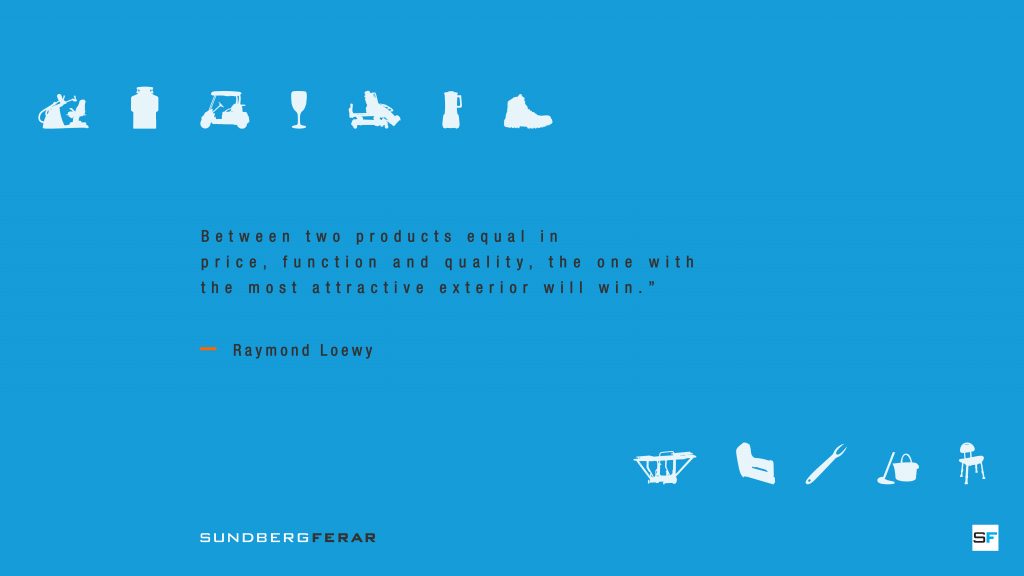
Just think – as you’re clicking endlessly through amazon, why is your first instinct to click on one thumbnail-sized image over the other hundreds? It’s because you seeand are attracted to its initial beauty, (which again goes back to the visual architecture of the product we discussed earlier). The end user will always start with beauty. As you’re walking through Costco with your cart, you lookat something first. That’s where visual beauty starts. Then you go near it and pick it up. That’s where the tactile beauty starts, and THEN when you use it, the functional beauty starts. But the first point no matter what is the visual beauty. The Father of industrial design himself, Raymond Loewy put it this way:
If you understand this and embrace this, you can apply this principle in any category of product or service – housewares, services, packaging, medical products – you name it.

Beauty in Specific Products
So how do you define what beauty really is in a specific case? It’s a question of time, context and persona – the trinity of beauty.
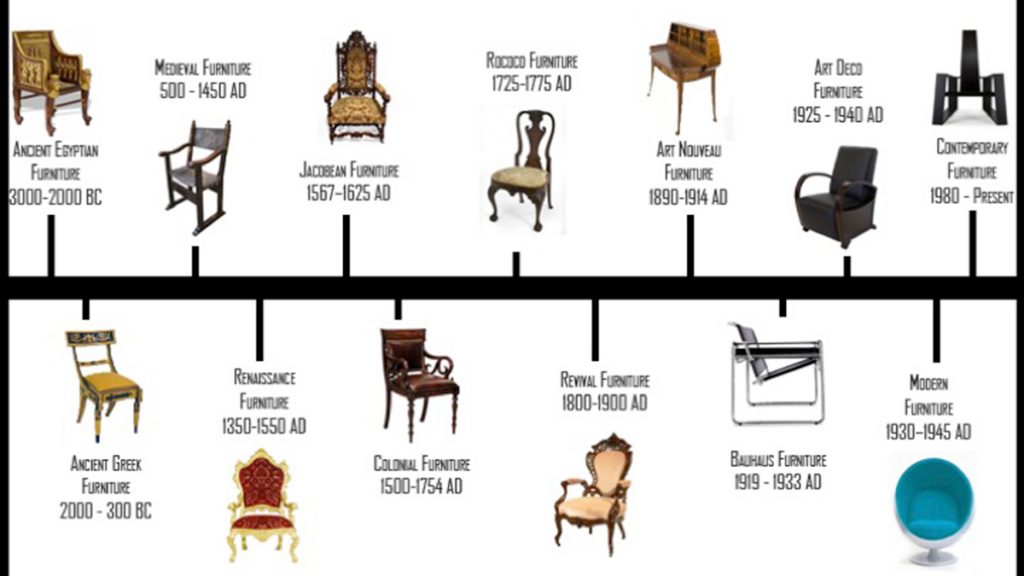
The first factor that determines whether something is beautiful is the time period within which it exists. Most of us are aware of at least one or two different art movements throughout history, like art deco, art nouveau, baroque style, rococo, or modern. If you look at a chair designed in the Roccoco period, you might find it jarring and busy at best. At the time, though, that’s what was considered beautiful. Beauty is molded by time, and the interaction between user and product is always determined by the culture surrounding them in its unique period of time.
Similarly, most people can tell the difference pretty easily between a chair designed, say, in ancient Egypt vs. a chair designed in the baroque period. This is because they look different according to what each designer was trying to achieve at the time in their product. This is part of what we do as designers. We have to be cognizant of what we want to create and the message we want to put across. We look at what we want to evoke and the time we’re in as well as what is forecasted in the future, all in order to determine what attributes should go into our product.
The second factor is the context. For example, say someone drew a chair on a piece of paper and brought it to me and asked, “Is this beautiful”? I would answer, “Let’s first go and make a quick physical mock-up or prototype, and then we can sit in it, spend time in it, see how it feels, see how the body reacts to it, use it and misuse it, break it, and then we’ll know if it’s really beautiful or not.” This act of function tells us if it is beautiful because in the context of a chair, its ergonomics and comfort – rather than pure visual appeal – are the primary factors that determine beauty. The force field around a product defines the meaning of beauty in its specific case.

Furthermore, maybe this specific chair is made for one specific person. It perfectly matches their height and all their anthropomorphic measurements. Is this then a universally usable chair for that one specific person, able to be used at all times and in all situations? No! Beauty is defined by the context in which it is being used.
Let’s say someone goes to work in an Aston Martin with its driver-hugging seats. Then they work at a desk all day, sitting in a Herman Miller Aeron chair, and in the evening they enjoy a basketball game sitting in stadium seating. This person has just used three different seats, all beautifully designed. BUT, if the person used that Aston Martin seat at their office, it would fail miserably. Again, if the Aeron chair were used for stadium seating, it would fail miserably there too. There is no absolute design. Even for that one single user, the beauty of a product is defined by its context and use case. You can’t just take one person, figure out what beauty means to them and then create a product that hits the mark every time. It has to be corroborated with the information of its context to be successful.
Again, when designing a product, the designer is never the user, so how do you understand your user and their context? Take this Clark forklift for example. I might be able to drive it, but I’m not using it all day everyday, and I’m not familiar with its surrounding context and the daily working realities of it. Therefore, as designers, we have to go to that point of origin and see how the real users that drive it are using it in the context – and even more importantly, how they are misusing it. For example, if it’s in the context of an amazon warehouse, maybe the context is very clean and this makes it easy to maneuver a forklift. However, if it’s in a port authority warehouse, it might be slippery, or crowded and messy, and it might be hazardous to maneuver. It’s not only what the user needs and wants in a product, it’s also how the context defines the needs that should be solved for. No product is ever designed alone. It is always designed within an ecosystem. That ecosystem acts as a checkpoint that defines beauty in that context. A Clark forklift might never be bought for its pure visual beauty, but if it’s a product of its ecosystem and it meets the needs of its context, it’s considered a beautiful product every time.

This flows into the world of VBL (visual brand language). People don’t buy a lawn mower because of its green and yellow color. However, if the green and yellow lawn mower has all the attributes they seek (ergonomic, easy to store, easy to maintain, easy to use etc), then those utility attributes get associated with the green and yellow color in the user’s mind. That means that next time, if they’re happy with the product, the chances that they’ll add another mower to their fleet or portfolio are significantly higher if it’s the same green and yellow color. It’s not just that it will look neat and tidy when they look at it alongside their other equipment, but the entire fleet will ooze that confidence to them so that they feel they can go out there and accomplished what the product promised. This will be the same with garage tools or kitchen utensils. The attributes of neatness, order, structure – which are subsets of beauty and the product architecture – constitute the robust foundation of a good VBL for your product/service portfolio and company identity.

Finally the persona will define beauty in a product. Beauty has to be a win-win-win between the three elements of time, context and persona. It’s important to realize, however, that as you design a product, it should not aim to be beautiful for anyone and everyone. You must understand the target user that you specifically want to attract to your product, their personal experiences, perceptions and lifestyle, and design it for them alone. For example, a Prius user is a very specific user who finds the attributes of that car uniquely beautiful. For him or her, a Prius is the most attractive vehicle. On the other hand, they might find the attributes of a Ford Raptor very unattractive. It will also be the reverse for a Ford Raptor user, and that’s okay.
Beauty is subjective, and you must not be afraid to embrace polarization in this area. Even given the mental models that we all have in common, we still differ in our preferences of beauty across time, context, and persona. There will be those that absolutely hate your product. That’s totally okay. As long as your target tribe of users absolutely loves your product, you’ve succeeded!
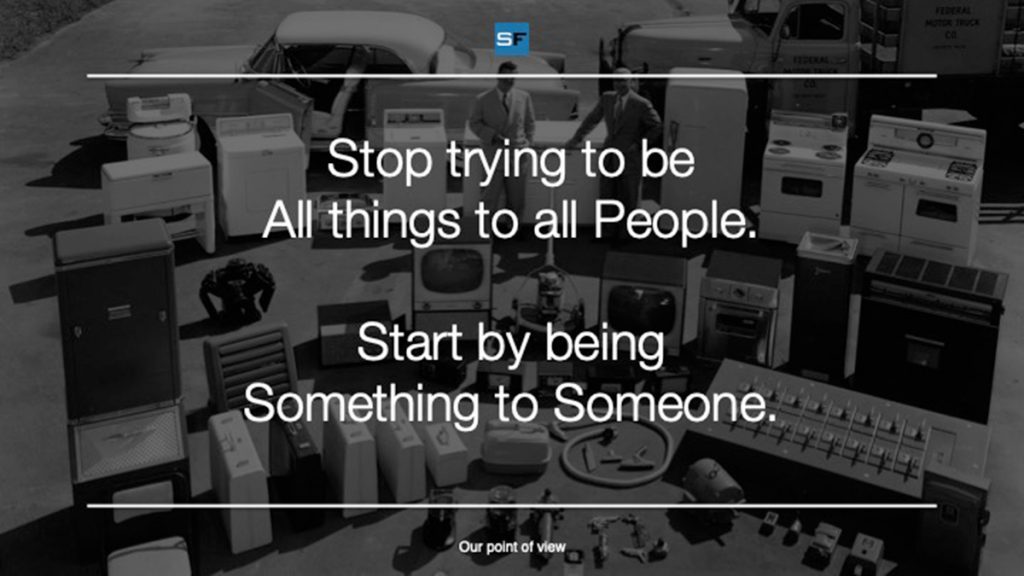
You can never please everyone everywhere all the time. Don’t dilute your product designs and the goal you’re trying to achieve by pandering to everyone. As we firmly believe here at Sundberg-Ferar, we must “Stop trying to be all things to all people. Start by being something to someone.” That means not just from a functional or performance perspective but also from the perspective of visual imagery.
Please, take all of this, and embark on the journey of understanding what beauty means for your product and service portfolio. Start using robust design research to extract the information of what will resound with your target users to make your next product beautiful for them. No matter what, infuse your creations with beauty, knowing now just how much beauty contains in its scope and vastness. Make everything you touch a bit better and a bit more beautiful for the betterment of humanity.

Now go out there and celebrate beauty! And hey – let us know what you learn!